

Hey there! As a supplier of MDF acoustic panels, I often get asked this question: "Are MDF acoustic panels heavy?" Today, I'm gonna dive deep into this topic and share all the info you need.
First off, let's understand what MDF is. MDF stands for Medium - Density Fiberboard. It's made by breaking down hardwood or softwood residuals into wood fibers, combining them with wax and a resin binder, and then applying high temperature and pressure. This process results in a dense and uniform panel.
The weight of MDF acoustic panels can vary quite a bit, and there are several factors that come into play.
Density of MDF
The density of MDF is a major determinant of its weight. Standard MDF usually has a density ranging from about 600 to 800 kilograms per cubic meter (kg/m³). But for acoustic applications, the density might be adjusted. Higher - density MDF can offer better acoustic performance as it can block more sound waves. However, this also means the panels will be heavier. A panel made from high - density MDF could weigh significantly more than one made from lower - density material. For example, if you have a standard 12mm thick MDF acoustic panel with a density of 650 kg/m³, it will be lighter compared to a 12mm thick panel with a density of 750 kg/m³.
Panel Size
Another obvious factor is the size of the panel. The larger the panel, the more material it contains, and thus the heavier it will be. A small 300mm x 300mm MDF acoustic panel will be much lighter than a large 1200mm x 2400mm panel. If you're planning a project, you need to consider how the size of the panels will impact the overall weight and how easy they'll be to handle and install.
Additional Layers or Treatments
Many MDF acoustic panels come with additional layers or treatments to enhance their acoustic properties. For instance, some panels might have a layer of sound - absorbing fabric on one side. This fabric adds a bit of weight to the panel. Also, if the panel is treated with special coatings for fire - resistance or moisture - resistance, these treatments can increase the weight as well.
Now, let's talk about how the weight of MDF acoustic panels can affect your project.
Installation
The weight of the panels is crucial during installation. Heavier panels can be more difficult to handle, especially if you're working on a large - scale project. You might need more manpower or special equipment to lift and position them. For example, if you're installing panels on a high ceiling, heavy panels can pose a safety risk. On the other hand, lighter panels are easier to maneuver, which can save time and labor costs during installation.
Structural Support
The weight of the panels also impacts the structural support required. If you're installing MDF acoustic panels on a wall or ceiling, the structure needs to be able to bear the weight. Heavier panels will require stronger framing or support systems. This is something you need to consider when planning your project to ensure the safety and stability of the installation.
Transportation
Transporting heavy MDF acoustic panels can be a challenge. It might require larger vehicles and more fuel, which can increase the transportation costs. Lighter panels are more convenient to transport, and you might be able to fit more of them in a single vehicle, reducing the number of trips and overall transportation expenses.
When it comes to our MDF acoustic panels, we offer a variety of options to suit different needs. We have MDF Acoustic Panel with Technical Veneer which not only provides good acoustic performance but also has an aesthetically pleasing look. The weight of these panels can be adjusted according to your specific requirements. If you need lighter panels for easier installation, we can customize the density for you.
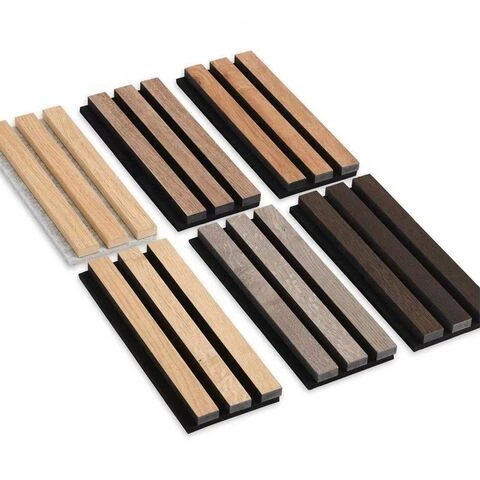
We also have MDF Acoustic Panel with Wood Veneer. These panels combine the natural beauty of wood veneer with the acoustic benefits of MDF. The wood veneer adds a bit of weight, but it also gives the panels a warm and inviting look. Whether you're working on a commercial space like a recording studio or a residential project like a home theater, our panels can be a great choice.

In conclusion, MDF acoustic panels can vary in weight depending on factors like density, size, and additional treatments. While heavier panels might offer better acoustic performance in some cases, they can also present challenges during installation, transportation, and require more structural support. Lighter panels, on the other hand, are more convenient to handle but might need to be carefully selected to ensure they meet your acoustic requirements.
If you're interested in our MDF acoustic panels and want to discuss your project in detail, whether it's about the weight, size, or any other aspect, don't hesitate to reach out. We're here to help you find the perfect solution for your acoustic needs.
References
- Wood Handbook: Wood as an Engineering Material. Forest Products Laboratory.
- ASTM International standards related to MDF and acoustic materials.