


Shoe Moulding
Your Professional Shoe Moulding Supplier!
Shanghai Shinystar Wood Co.,Ltd. is a professional engaged in the research, development, and production of One-Stop Building Materials and Interior Finishing Materials. Such as Floorings, Doors,Gesso Primed MDF and Wood Mouldings,Laminated Posts and Beams, LVL,H2, H3, H4Treated Products, Plywood, MDF Board, etc.


Why Choose Us
Customization Services
We offer professional product customization services. Whether in material, color, or design, we can flexibly adjust to meet individual customer needs and fulfill the specific requirements of different application scenarios.
Quality Control
We have implemented ERP and PDM management systems to fully realize information-based and systematic management as well as quality control, effectively improving production efficiency and ensuring consistent product quality.
Sales Market
Our products have been exported to numerous countries and regions, including Australia, the United States, Canada, the United Kingdom, New Zealand, Chile, Spain, South America, Europe, and Southeast Asia. They have received widespread praise in both domestic and international markets and have established a strong brand reputation.
Quality Service
We provide professional team consulting services. Our experts can offer specialized advice to customers. Additionally,we provide detailed installation instructions; whether through manuals or online support,our team will assist customers in resolving any issues encountered during the installation process.
Specification
|
Length |
8ft /16ft |
|
Width |
3/4 in |
|
Thickness |
3/4 in |
|
Material |
MDF |
|
Country of origin |
Fujian, China |
|
Surface Treatment |
White Primed |
|
After-sales Service |
Online technical support, on-site testing |
|
MOQ |
20 FT Container |
|
Load Time |
25-30 Days |
Benefits of Shoe Molding
Clean Finishing Touch
It's rare that a home's flooring is completely flat, but walls always are. Because of this, gaps between flooring and baseboards are very common. Shoe molding helps cover those gaps and gives the baseboards and streamlined, finished look.
Added Sealent
Gaps aren't just unsightly, they're also not good for your home. These gaps leave room for insects, dust, and dirt to get caught and become nearly impossible to clean. With shoe molding, those gaps are covered, further protecting your home.
More Affordable Improvement
Shoe molding can help you update your space without having to pay the cost of completely replacing your baseboards. Shoe molding can be more easily replaced, painted, or updated as necessary to match the baseboards you already have. Plus, it may help your home's resale value down the road.
Shoe Moulding Size and Shape
Shoe moulding is typically smaller and thinner in size, with a more understated profile. The arc is usually about 1/8 of an inch, and measures about ¾ inch in height and ½ inch in depth.
By comparison, quarter round features a curved shape creating a perfect arc. It is thicker in size, usually ¾ inch by ¾ inch and can cover larger gaps between the floor and baseboard.
Wood
Wood is a prominent and popular choice among homeowners. The look of natural woodgrain is aesthetically appealing and high-end. There are a variety of wood species for Shoe moulding and Quarter round including: Hemlock, Poplar, Oak, and Pine, offering a range of textures and colors to match or contrast various interior designs.
MDF
MDF (medium-density fiberboard) is an increasingly popular material among designers, contractors, and homeowners – for a reason. It's incredibly versatile, meaning it can be used in many parts of the home, including baseboards and moulding. It also has a smooth surface with no natural imperfections. It's typically primed, making it easy to paint. Plus, it doesn't split, which makes it easy to install.


Wood floors need room to expand along walls and vertical structures. Shoe molding has many jobs:
● Hiding expansion areas
● Covering cut ends
● Dealing with height differences or floor transitions
● Adding a nice finishing touch
If you skip shoe moldings, you might end up with ugly gaps between walls and floors, causing energy waste from drafts sneaking in through these openings.
Applications of Shoe Moulding
Shoe molding, also known as quarter round or shoe trim, is a versatile building material that can be used in a variety of ways. Its most common function is to cover up the joint where two floor surfaces meet, such as between a tile floor and carpet or vinyl tile.
It can also be used to provide finishing touches in other areas of the home. Shoe molding can be used to frame windows and doors, or it can even be installed along the baseboards for a clean, streamlined look.
Tips For Installing Shoe Molding
Measure, cut, and install the trim one piece at a time. Doing it all beforehand can result in mistakes.
It's a great idea to practice cutting and fitting with waste trim. You'll find it much easier to get the cut you want, and you'll end up with better-looking molding.
Make sure to firmly press the molding against the floor and baseboard when nailing it into place. You don't want it moving out of place.
Put nails in about every foot, making sure the nails go into the baseboard.
You can add glue to each piece that joins with another to make sure they fit more snugly together.
Add a finish to your shoe molding before installing it. It's way easier to do it before than when it's on your baseboard.
Order Process
Contact Customer Service
1
>>
Submit Order
2
>>
Obtain a Quote
3
>>
Confirm Order
4
>>
Arrange Payment
5
>>
Track Order
6
>>
Receive and Inspect Goods
7
Packaging and Shipping
|
Packaging |
PVC Film & Pallet |
|
Transportation methods |
Road transport, rail transport, sea transport, air transport |
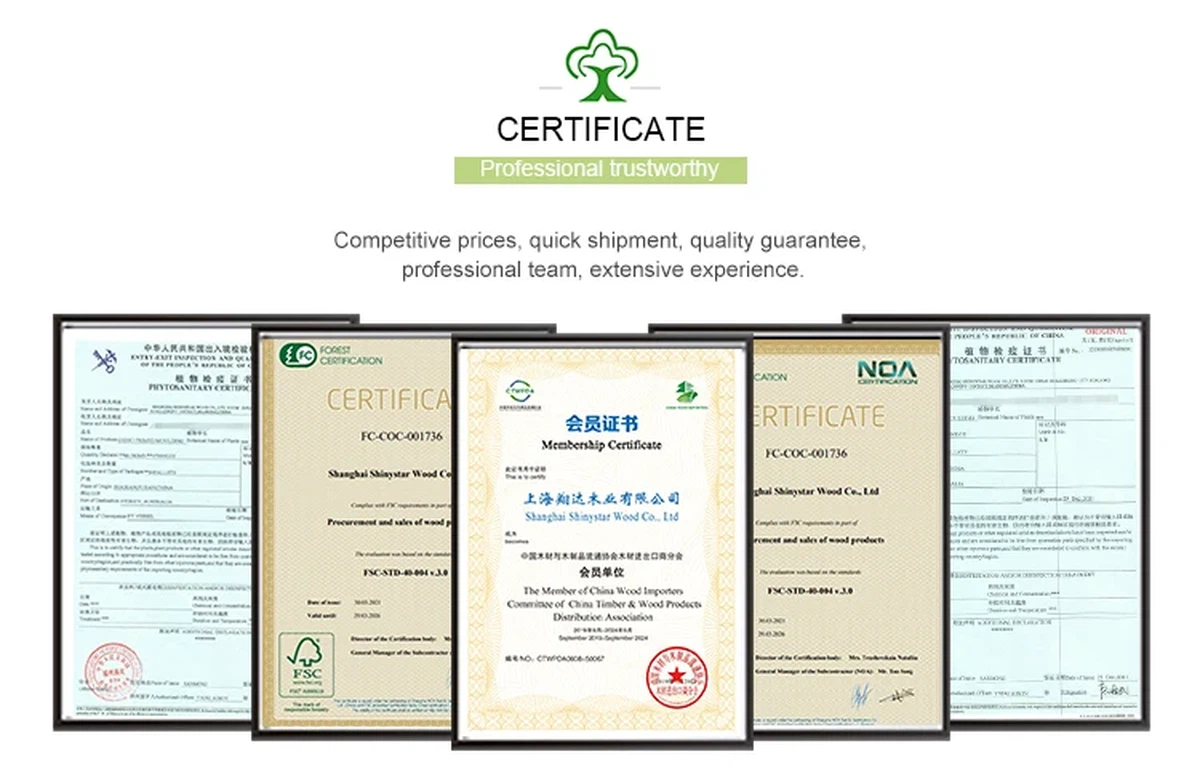
Our Certificate

FAQ
As one of the leading shoe moulding manufacturers and suppliers in China, we warmly welcome you to wholesale bulk customized shoe moulding from our factory. Also, quotation is available.
shoe moulding, MDF Shoe Moulding, Red Oak Shoe Molding