

As a supplier of MDF acoustic panels, one question that frequently arises from our customers is whether these panels are resistant to insects. In this blog post, I'll delve into this topic, exploring the factors that influence the insect - resistance of MDF acoustic panels and providing a comprehensive answer.
Understanding MDF Acoustic Panels
Before discussing insect resistance, it's important to understand what MDF acoustic panels are. Medium - density fiberboard (MDF) is an engineered wood product made by breaking down hardwood or softwood residuals into wood fibers, often in a defibrator, combining it with wax and a resin binder, and forming panels by applying high temperature and pressure.
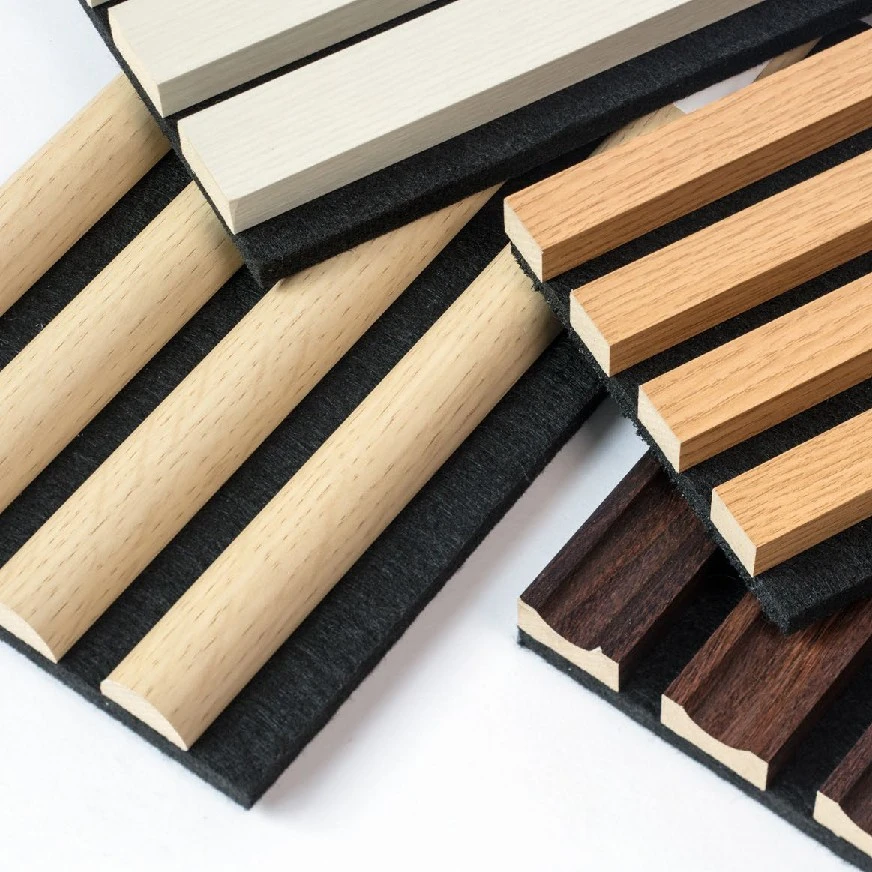
Acoustic panels are designed to absorb sound and reduce echo in a room. They are commonly used in recording studios, home theaters, offices, and other spaces where good acoustics are desired. Our company offers a variety of MDF acoustic panels, such as the MDF Acoustic Panel with Wood Veneer and the MDF Acoustic Panel with Technical Veneer, which not only provide excellent acoustic performance but also have an aesthetically pleasing appearance.
Factors Affecting Insect Resistance of MDF Acoustic Panels
1. Material Composition
The base material of MDF is wood fibers. Wood, in general, is a natural food source for many insects, such as termites, carpenter ants, and powderpost beetles. These insects are attracted to the cellulose in wood. Since MDF is made from wood fibers, it has the potential to be attacked by insects if the right conditions are met.
However, the resin binder used in the manufacturing of MDF can play a role in insect resistance. Some resin binders may have chemical properties that are unappealing or even toxic to insects. For example, certain formaldehyde - based resins can act as a deterrent to some insects. But it's important to note that the effectiveness of these resins can vary depending on the type of insect and the concentration of the resin in the panel.

2. Treatment and Coating
To enhance the insect - resistance of MDF acoustic panels, various treatments and coatings can be applied.
- Chemical Treatments: Insecticides can be added during the manufacturing process. These chemicals are designed to kill or repel insects. For example, borate - based treatments are commonly used in wood products. Borates are effective against a wide range of insects, including termites and powderpost beetles. They work by interfering with the insect's digestive system, ultimately leading to its death.
- Surface Coatings: Applying a protective coating on the surface of the MDF acoustic panel can also provide a barrier against insects. Paint, varnish, or laminate can prevent insects from directly accessing the wood fibers. A well - applied and durable coating can seal the pores of the MDF, making it more difficult for insects to penetrate.
3. Environmental Conditions
The environment in which the MDF acoustic panels are installed has a significant impact on their insect resistance.
- Humidity: High humidity levels can create a favorable environment for insects. Many wood - boring insects prefer moist wood because it is easier to chew through and provides a better habitat for their larvae. If the installation area has poor ventilation and high humidity, the risk of insect infestation increases. For example, in basements or bathrooms where humidity is often high, extra precautions need to be taken to protect the MDF acoustic panels.
- Temperature: Insect activity is also influenced by temperature. Some insects are more active in warm weather, while others can tolerate colder temperatures. In regions with a mild climate throughout the year, the risk of insect infestation may be higher compared to areas with extreme cold or hot temperatures.
Insect Resistance of Our MDF Acoustic Panels
At our company, we take several measures to ensure the insect resistance of our MDF acoustic panels.
- Quality Materials and Manufacturing Process: We use high - quality resin binders in our MDF production. These binders not only provide structural integrity to the panels but also have some degree of insect - repellent properties. Additionally, our manufacturing process is carefully controlled to ensure a consistent distribution of the resin and fibers, which helps to enhance the overall durability of the panels.
- Treatment Options: We offer our customers the option of having the MDF acoustic panels treated with borate - based insecticides. This treatment is applied during the manufacturing process, ensuring that the entire panel is protected. We also provide a range of surface coating options, including paint and laminate, which can further enhance the insect resistance of the panels.
- Installation and Maintenance Guidelines: We provide detailed installation and maintenance guidelines to our customers. These guidelines include recommendations on proper ventilation, humidity control, and regular inspections. By following these guidelines, customers can minimize the risk of insect infestation and extend the lifespan of their MDF acoustic panels.
Comparing MDF Acoustic Panels with Other Materials in Terms of Insect Resistance
When considering acoustic panels, customers often compare MDF with other materials such as solid wood and plastic.
- Solid Wood: Solid wood is more vulnerable to insect attacks compared to MDF. Since solid wood has a more natural structure and larger pores, it is easier for insects to penetrate and establish colonies. In addition, solid wood may not have the same level of chemical treatment as MDF. However, solid wood can be more aesthetically appealing to some customers.
- Plastic: Plastic acoustic panels are generally more resistant to insects. Since plastic is not a natural food source for insects, there is little risk of insect infestation. However, plastic panels may not have the same acoustic performance as MDF acoustic panels, and they may not offer the same warm, natural look.
Conclusion
In conclusion, MDF acoustic panels can be resistant to insects, but it depends on several factors, including material composition, treatment, and environmental conditions. At our company, we are committed to providing high - quality MDF acoustic panels with excellent insect - resistance. By using quality materials, applying appropriate treatments, and offering installation and maintenance guidelines, we ensure that our customers can enjoy the benefits of our acoustic panels without worrying about insect infestations.
If you are interested in purchasing MDF acoustic panels for your project, we invite you to contact us for more information and to discuss your specific requirements. Our team of experts is ready to assist you in finding the best solution for your acoustic needs.
References
- "Wood - Destroying Insects: Biology and Control" by the University of Kentucky College of Agriculture.
- "Termite Control in Buildings" by the United States Department of Agriculture.
- "The Handbook of Wood Chemistry and Wood Composites" edited by Roger M. Rowell.